



Beef Roulades with Feta Filling

Beef roulades are a true winter classic of German home cooking. This version breaks with the traditional bacon-and-onion filling and goes Mediterranean instead, with feta, colourful veg and herbes de Provence. The result: tender, juicy roulades with a filling that surprises and delights. Perfect if you're watching your carbs but still want a hearty, comforting braise.
Ingredients
- 4 beef roulades (thin beef braising slices), about 500 g total
- 1 clove garlic
- 4 spring onions
- 1 red pepper
- 75 g feta, the German recipe uses Schafskäse (sheep's cheese); feta works perfectly
- 3 tsp mustard
- 250 ml vegetable stock
- 250 ml red wine
- 1 crème fraîche, about 200 g
- sunflower oil, for frying
- herbes de Provence, to taste
- salt and freshly ground pepper
The ingredient amounts above scale with your choice. The value per serving stays the same, while the total in the pot grows with the number of servings.
All nutrition values side by side
| Nutrient | per serving (estimate) | Total for 4 Servings |
|---|---|---|
| Calories | 480 kcal | 1,920 kcal |
| Carbohydrates | 7 g | 28 g |
| Protein | 42 g | 168 g |
| Fat | 28 g | 112 g |
| Fibre | 2 g | 8 g |
| of which sugar | 4 g | 16 g |
How this is calculated
Target amount = ingredient amount × target servings ÷ base servings. The result is then rounded for kitchen use: from 100 g or ml to the nearest 5, between 1 and 99 to the nearest 1, pieces and spoons to half units, amounts below one unit to quarters, thirds or halves. Teaspoons and tablespoons also go down to an eighth, kilograms and litres stay finer.
Total = value per serving × target servings. The value per serving is unchanged, because ingredient amount and serving count change by the same factor.
Sources
- Regulation (EU) No 1169/2011 (FIC), Art. 32 and 33: nutrition values per 100 g or 100 ml, additionally allowed per portion.
- European Commission, Guidance document for competent authorities for the control of compliance with EU food law, setting of tolerances for nutrient values declared on a label, December 2012.
Nutrition values are estimates from the recipe record, not laboratory results. Even for checked labels the EU sets tolerances: for fat, protein and carbohydrates 20 percent in the range of 10 to 40 g per 100 g, and 2 g per 100 g below that. Home cooking varies more, because variety, size and cooking loss of the ingredients differ. Kitchen rounding also shifts the total slightly against the plain rule of three. Anyone who has to keep amounts exact for medical reasons, for example during a nutrition therapy prescribed by a doctor, should discuss them with a doctor or a registered dietitian. Your serving count is calculated in your browser only, it is neither stored nor transmitted.
Instructions
- Finely chop the garlic and stir it into the mustard to make a smooth paste.
- Season the beef slices with salt and pepper on both sides, then spread evenly with the mustard-garlic paste.
- Wash the spring onions and red pepper and cut into small pieces. Scatter over the beef.
- Crumble or chop the feta into small pieces and distribute over the vegetables. Season everything with herbes de Provence.
- Roll up each slice tightly from one end and secure with roulade pins, clips or kitchen string.
- Heat the sunflower oil in a pan and sear the roulades on all sides until well browned.
- Deglaze with the hot vegetable stock, then add the red wine. Add any leftover filling vegetables to the pan and braise everything gently over low heat for about 1.5 hours.
- To finish, stir in the crème fraîche and season the sauce to taste. For a creamier consistency, thicken the sauce with a little cornflour or locust bean gum.
Cooked it? Tell us how it turned out.
Did you like it? Rate this recipe
Nutrition facts per serving (estimate)
| Calories | 480 kcal |
|---|---|
| Carbohydrates | 7 g |
| Protein | 42 g |
| Fat | 28 g |
| Fibre | 2 g |
| of which sugar | 4 g |
Frequently asked questions
Can I freeze the roulades?
Yes, the finished roulades freeze well. Freeze them with a little sauce in an airtight container and use within 2 to 3 months.
What goes well as a side with beef roulades and feta?
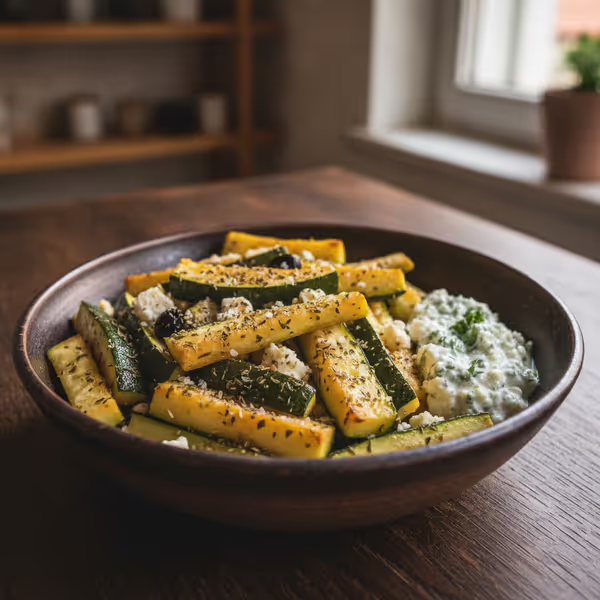
Braised red cabbage is a classic match. For a lower-carb option, cauliflower mash or pan-fried courgette work beautifully too.
What's the best way to secure the roulades?
You can use roulade pins, metal clips or plain kitchen string. All three keep the roulades neatly in shape while they braise.
Can I change up the filling?
Absolutely. The classic version uses bacon and onions, but you can adapt the filling to taste, for example with carrots, celery or different cheeses.



Comments
No comments yet. Be the first to write one!
Thanks for your comment! We will review it and publish it shortly.