



Whole Artichoke with Yogurt-Mustard Dip
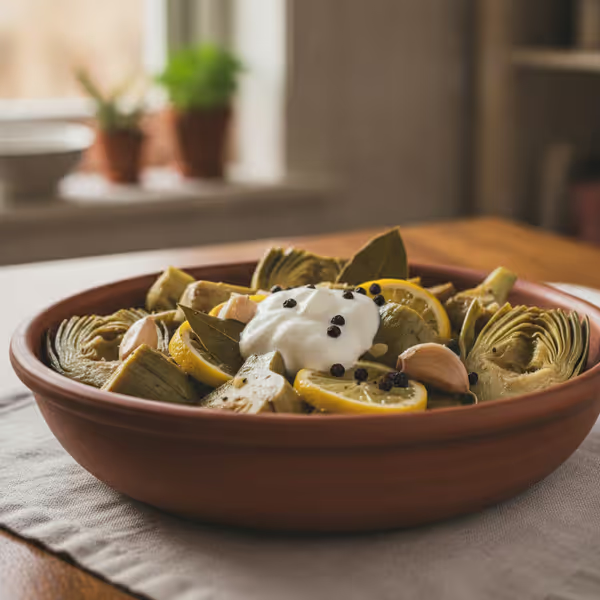
Cooking a fresh artichoke sounds more involved than it actually is. You need barely any ingredients, one big pot and a little patience while it simmers. Your reward is a treat that's hard to compare with the marinated hearts from a jar. You dip the leaves one by one into a creamy yogurt-mustard sauce, working your way down to the prized artichoke heart.
Ingredients
- 1 artichoke, large
- 1 lemon
- 1 bay leaf
- 2 garlic cloves
- black peppercorns, a few
- 2 tbsp yogurt
- 2 tbsp mayonnaise
- 1 tbsp mustard
- 1 tsp lemon juice
- salt
- pepper
The ingredient amounts above scale with your choice. The value per serving stays the same, while the total in the pot grows with the number of servings.
All nutrition values side by side
| Nutrient | per serving (estimate) | Total for 1 Serving |
|---|---|---|
| Calories | 280 kcal | 280 kcal |
| Carbohydrates | 16 g | 16 g |
| Protein | 7 g | 7 g |
| Fat | 20 g | 20 g |
| Fibre | 7 g | 7 g |
| of which sugar | 4 g | 4 g |
How this is calculated
Target amount = ingredient amount × target servings ÷ base servings. The result is then rounded for kitchen use: from 100 g or ml to the nearest 5, between 1 and 99 to the nearest 1, pieces and spoons to half units, amounts below one unit to quarters, thirds or halves. Teaspoons and tablespoons also go down to an eighth, kilograms and litres stay finer.
Total = value per serving × target servings. The value per serving is unchanged, because ingredient amount and serving count change by the same factor.
Sources
- Regulation (EU) No 1169/2011 (FIC), Art. 32 and 33: nutrition values per 100 g or 100 ml, additionally allowed per portion.
- European Commission, Guidance document for competent authorities for the control of compliance with EU food law, setting of tolerances for nutrient values declared on a label, December 2012.
Nutrition values are estimates from the recipe record, not laboratory results. Even for checked labels the EU sets tolerances: for fat, protein and carbohydrates 20 percent in the range of 10 to 40 g per 100 g, and 2 g per 100 g below that. Home cooking varies more, because variety, size and cooking loss of the ingredients differ. Kitchen rounding also shifts the total slightly against the plain rule of three. Anyone who has to keep amounts exact for medical reasons, for example during a nutrition therapy prescribed by a doctor, should discuss them with a doctor or a registered dietitian. Your serving count is calculated in your browser only, it is neither stored nor transmitted.
Instructions
- Stir together all the dip ingredients (yogurt, mayonnaise, mustard, lemon juice, salt and pepper) in a small bowl and season to taste. Set aside.
- Using a sharp knife, generously trim off the stem and the pointed top of the artichoke. Rub the cut surfaces with lemon juice so they don't discolour.
- Bring a large pot of water to the boil. Add the bay leaf, peppercorns, salt, the peeled garlic cloves and a quartered lemon.
- Stand the artichoke head-down in the pot. It should be fully submerged. Simmer for about 30 to 40 minutes. The artichoke is done when the outer leaves pull away easily.
- To serve, sit the cooked artichoke head-down on a plate. Pull off the leaves one at a time, working from the outside in, dip each into the sauce and draw the fleshy end through your teeth.
- Eventually you'll reach the hairy part, known as the choke. This isn't edible and should be removed. Underneath you'll find the artichoke heart, which can be eaten in full.
Cooked it? Tell us how it turned out.
Did you like it? Rate this recipe
Nutrition facts per serving (estimate)
| Calories | 280 kcal |
|---|---|
| Carbohydrates | 16 g |
| Protein | 7 g |
| Fat | 20 g |
| Fibre | 7 g |
| of which sugar | 4 g |
Frequently asked questions
How long does an artichoke need to cook?
A large fresh artichoke needs about 30 to 40 minutes in gently boiling water. It's done when the outer leaves pull away easily.
What is the choke of an artichoke?
The choke is the hairy, fibrous part inside the artichoke, sitting right above the heart. It isn't edible and is removed before you eat the heart.
How do you eat an artichoke?
Pull the leaves off one by one, working from the outside in, dip them into a sauce and draw the fleshy end through your teeth. At the end, remove the choke and eat the artichoke heart.
How much does a fresh artichoke cost?
Fresh artichokes are usually available at farmers' markets or supermarkets for a modest price per piece, often just a pound or two each.



Comments
No comments yet. Be the first to write one!
Thanks for your comment! We will review it and publish it shortly.