



Sweet Coconut Bread
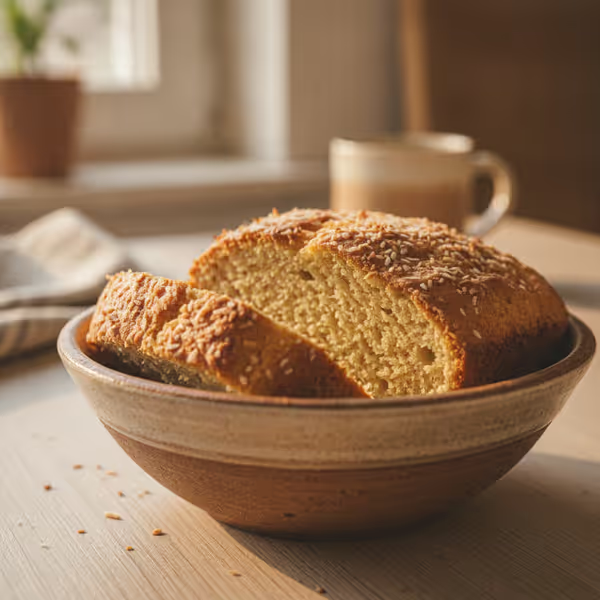
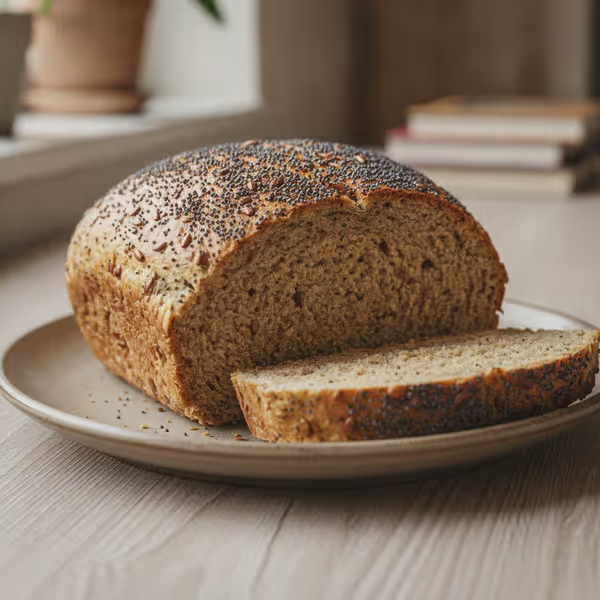
This sweet coconut bread wins you over with a moist, tender crumb and a gentle coconut flavour that pairs beautifully with almost anything. Spread it with fruity jam, a creamy topping or savoury cold cuts: it works for whatever you fancy on the breakfast or supper table. Made with coconut flour, it's naturally gluten-free and low in carbs. A lovely change you'll want to bake again and again.
Ingredients
- 80 g coconut flour
- 6 eggs
- 110 g butter, softened
- 1 tsp baking powder
- 2 tsp Sucolin or xylitol, or another granulated sweetener such as erythritol
- 0.5 tsp salt
The ingredient amounts above scale with your choice. The value per serving stays the same, while the total in the pot grows with the number of servings.
All nutrition values side by side
| Nutrient | per serving (estimate) | Total for 10 Servings |
|---|---|---|
| Calories | 175 kcal | 1,750 kcal |
| Carbohydrates | 3.5 g | 35 g |
| Protein | 5.5 g | 55 g |
| Fat | 14.5 g | 145 g |
| Fibre | 2.5 g | 25 g |
| of which sugar | 0.5 g | 5 g |
How this is calculated
Target amount = ingredient amount × target servings ÷ base servings. The result is then rounded for kitchen use: from 100 g or ml to the nearest 5, between 1 and 99 to the nearest 1, pieces and spoons to half units, amounts below one unit to quarters, thirds or halves. Teaspoons and tablespoons also go down to an eighth, kilograms and litres stay finer.
Total = value per serving × target servings. The value per serving is unchanged, because ingredient amount and serving count change by the same factor.
Sources
- Regulation (EU) No 1169/2011 (FIC), Art. 32 and 33: nutrition values per 100 g or 100 ml, additionally allowed per portion.
- European Commission, Guidance document for competent authorities for the control of compliance with EU food law, setting of tolerances for nutrient values declared on a label, December 2012.
Nutrition values are estimates from the recipe record, not laboratory results. Even for checked labels the EU sets tolerances: for fat, protein and carbohydrates 20 percent in the range of 10 to 40 g per 100 g, and 2 g per 100 g below that. Home cooking varies more, because variety, size and cooking loss of the ingredients differ. Kitchen rounding also shifts the total slightly against the plain rule of three. Anyone who has to keep amounts exact for medical reasons, for example during a nutrition therapy prescribed by a doctor, should discuss them with a doctor or a registered dietitian. Your serving count is calculated in your browser only, it is neither stored nor transmitted.
Instructions
- Preheat the oven to 160C (fan).
- Using a hand mixer, beat the eggs, softened butter and Sucolin (or xylitol) until light and fluffy.
- Gradually mix in the coconut flour, baking powder and salt until you have a smooth, even batter.
- Spoon the batter into a greased loaf tin and bake in the preheated oven for about 40-45 minutes, until the bread is baked through.
Cooked it? Tell us how it turned out.
Did you like it? Rate this recipe
Nutrition facts per serving (estimate)
| Calories | 175 kcal |
|---|---|
| Carbohydrates | 3.5 g |
| Protein | 5.5 g |
| Fat | 14.5 g |
| Fibre | 2.5 g |
| of which sugar | 0.5 g |
Frequently asked questions
Is this coconut bread really gluten-free?
Yes. The recipe uses only coconut flour and contains no wheat flour or other gluten-containing ingredients.
Can I swap the Sucolin for something else?
Yes, xylitol is listed as a direct alternative and works just as well. Other sweeteners such as erythritol also work.
How should I store the coconut bread?
Keep it in an airtight container in the fridge, where it stays fresh for up to 4 days.
What goes best with sweet coconut bread?
It's lovely with jam, cream cheese or nut butter, as well as with savoury cold cuts and cheese.

Comments
No comments yet. Be the first to write one!
Thanks for your comment! We will review it and publish it shortly.