



Fruit Smoothie
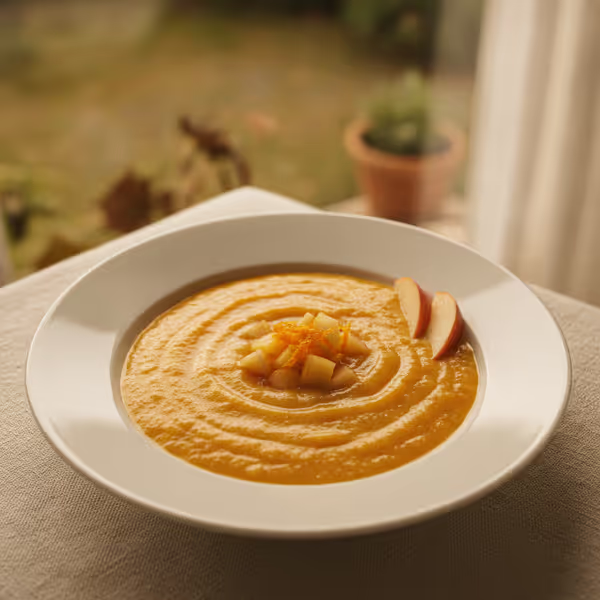
This fruit smoothie made with apple, pear and orange comes together in just a few minutes and gives you a fruity, refreshing boost. Best of all: you don't need any exotic ingredients, just what you almost always have at home anyway. The combination of sweet pear, zesty orange and crisp apple makes a pleasantly mild smoothie that you can adjust to taste with more or less water.
Ingredients
- 1 apple
- 1 pear
- 2 oranges
- 0.5 l water, plus more to thin, as needed
The ingredient amounts above scale with your choice. The value per serving stays the same, while the total in the pot grows with the number of servings.
All nutrition values side by side
| Nutrient | per serving (estimate) | Total for 2 Servings |
|---|---|---|
| Calories | 120 kcal | 240 kcal |
| Carbohydrates | 28 g | 56 g |
| Protein | 1.5 g | 3 g |
| Fat | 0.5 g | 1 g |
| Fibre | 4 g | 8 g |
| of which sugar | 22 g | 44 g |
How this is calculated
Target amount = ingredient amount × target servings ÷ base servings. The result is then rounded for kitchen use: from 100 g or ml to the nearest 5, between 1 and 99 to the nearest 1, pieces and spoons to half units, amounts below one unit to quarters, thirds or halves. Teaspoons and tablespoons also go down to an eighth, kilograms and litres stay finer.
Total = value per serving × target servings. The value per serving is unchanged, because ingredient amount and serving count change by the same factor.
Sources
- Regulation (EU) No 1169/2011 (FIC), Art. 32 and 33: nutrition values per 100 g or 100 ml, additionally allowed per portion.
- European Commission, Guidance document for competent authorities for the control of compliance with EU food law, setting of tolerances for nutrient values declared on a label, December 2012.
Nutrition values are estimates from the recipe record, not laboratory results. Even for checked labels the EU sets tolerances: for fat, protein and carbohydrates 20 percent in the range of 10 to 40 g per 100 g, and 2 g per 100 g below that. Home cooking varies more, because variety, size and cooking loss of the ingredients differ. Kitchen rounding also shifts the total slightly against the plain rule of three. Anyone who has to keep amounts exact for medical reasons, for example during a nutrition therapy prescribed by a doctor, should discuss them with a doctor or a registered dietitian. Your serving count is calculated in your browser only, it is neither stored nor transmitted.
Instructions
- Wash the apple and pear and cut them into rough chunks, leaving the skin on. Peel the oranges and cut them into pieces too.
- Add all the fruit to the blender.
- Pour in water until the blender is about half full.
- Start the blender on a low speed and blend the fruit slowly until there are no large chunks left.
- Then blend on high for a few seconds until you have a smooth, even fruit smoothie.
- Taste the finished smoothie and thin with a little more water until it reaches the consistency you like.
Cooked it? Tell us how it turned out.
Did you like it? Rate this recipe
Nutrition facts per serving (estimate)
| Calories | 120 kcal |
|---|---|
| Carbohydrates | 28 g |
| Protein | 1.5 g |
| Fat | 0.5 g |
| Fibre | 4 g |
| of which sugar | 22 g |
Frequently asked questions
Do I need to peel the apple and pear?
No, in this recipe the apple and pear go in whole, skin and all. Only the oranges need peeling.
Can I make this smoothie with other fruit?
The basic recipe works well as a starting point. Feel free to swap the fruit by season or taste, as long as you keep to a similar total amount.
How long does the fruit smoothie keep?
It's best enjoyed freshly made. Covered in the fridge it will keep for about a day, though it loses some flavour and freshness.
Can I use juice or plant milk instead of water?
The recipe calls for water. For a different consistency or a little more sweetness you can swap some of the water for orange juice, though that's a variation on the original.


Comments
No comments yet. Be the first to write one!
Thanks for your comment! We will review it and publish it shortly.