



Basic Salad Dressing

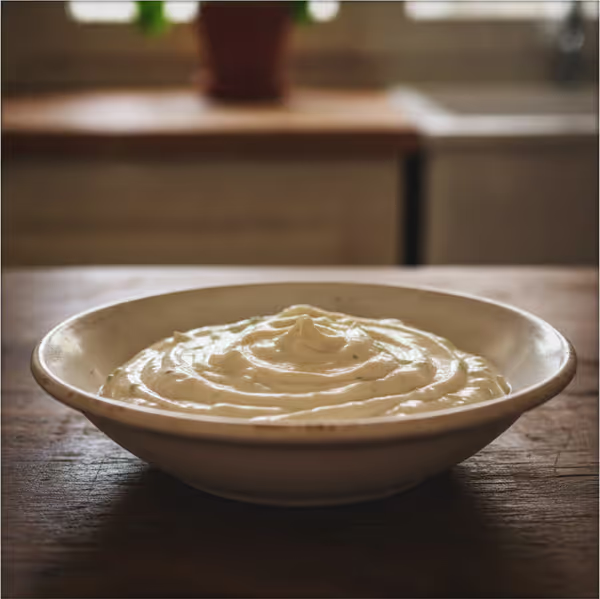
A good salad dressing doesn't need a long ingredient list. This basic recipe shows how just four ingredients come together into a balanced dressing that works with almost any leafy salad. Best of all, you can make it ahead and keep it on hand, then tweak it to taste right before serving. That way you always have a fresh, homemade dressing ready to go, no shop-bought bottles required.
Ingredients
- 60 ml vegetable stock or water
- 1-2 tbsp vinegar or lemon juice
- 2 tbsp cold-pressed vegetable oil
- 0.5 tsp mustard or horseradish
- finely diced onion, optional, to finish
- fresh herbs, optional, to finish
- salt and pepper, optional, to taste
- honey or jam, optional, to finish
- balsamic vinegar or tomato purée, optional, to finish
- locust bean gum (carob gum), optional, to thicken; find it in health-food shops or online. Xanthan gum works too
The ingredient amounts above scale with your choice. The value per serving stays the same, while the total in the pot grows with the number of servings.
All nutrition values side by side
| Nutrient | per serving (estimate) | Total for 2 Servings |
|---|---|---|
| Calories | 95 kcal | 190 kcal |
| Carbohydrates | 1 g | 2 g |
| Protein | 0.5 g | 1 g |
| Fat | 9 g | 18 g |
| Fibre | 0.1 g | 0.2 g |
| of which sugar | 0.5 g | 1 g |
How this is calculated
Target amount = ingredient amount × target servings ÷ base servings. The result is then rounded for kitchen use: from 100 g or ml to the nearest 5, between 1 and 99 to the nearest 1, pieces and spoons to half units, amounts below one unit to quarters, thirds or halves. Teaspoons and tablespoons also go down to an eighth, kilograms and litres stay finer.
Total = value per serving × target servings. The value per serving is unchanged, because ingredient amount and serving count change by the same factor.
Sources
- Regulation (EU) No 1169/2011 (FIC), Art. 32 and 33: nutrition values per 100 g or 100 ml, additionally allowed per portion.
- European Commission, Guidance document for competent authorities for the control of compliance with EU food law, setting of tolerances for nutrient values declared on a label, December 2012.
Nutrition values are estimates from the recipe record, not laboratory results. Even for checked labels the EU sets tolerances: for fat, protein and carbohydrates 20 percent in the range of 10 to 40 g per 100 g, and 2 g per 100 g below that. Home cooking varies more, because variety, size and cooking loss of the ingredients differ. Kitchen rounding also shifts the total slightly against the plain rule of three. Anyone who has to keep amounts exact for medical reasons, for example during a nutrition therapy prescribed by a doctor, should discuss them with a doctor or a registered dietitian. Your serving count is calculated in your browser only, it is neither stored nor transmitted.
Instructions
- Add the vegetable stock (or water), vinegar (or lemon juice), cold-pressed vegetable oil and mustard (or horseradish) to a screw-top jar or a tall jug. Mix or shake well until you have a smooth, homogeneous dressing.
- Use the base dressing straight away, or pour it into a screw-top jar and keep it chilled to have on hand.
- Just before serving, taste and finish the dressing however you like: try diced onion, fresh herbs, salt, pepper, a little more mustard or horseradish, honey or jam, or a splash of balsamic vinegar or tomato purée.
- For a dressing that clings better to the leaves, stir in a little locust bean gum (available from health-food shops) until it thickens to your liking.
Cooked it? Tell us how it turned out.
Did you like it? Rate this recipe
Nutrition facts per serving (estimate)
| Calories | 95 kcal |
|---|---|
| Carbohydrates | 1 g |
| Protein | 0.5 g |
| Fat | 9 g |
| Fibre | 0.1 g |
| of which sugar | 0.5 g |
Frequently asked questions
How long does homemade salad dressing keep?
Stored chilled in a screw-top jar, the base dressing keeps for several days. Give it a good shake before serving and season it fresh.
Can I make this salad dressing vegan?
Yes, the base recipe is naturally vegan. When finishing it, just swap the honey for a plant-based sweetener such as agave syrup.
How can I thicken the dressing so it clings better?
A little locust bean gum, available from health-food shops, gives a light body so the dressing coats the leaves more evenly. Xanthan gum works well too.
Which oil works best for salad dressing?
Go for a cold-pressed vegetable oil such as rapeseed, flaxseed or olive oil. They bring good flavour and useful fatty acids to the mix.

Comments
No comments yet. Be the first to write one!
Thanks for your comment! We will review it and publish it shortly.