



American Coleslaw – Creamy Cabbage Salad
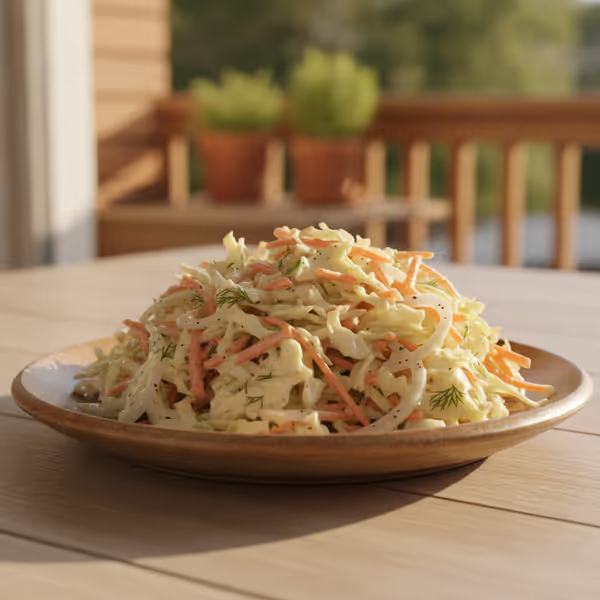
Crunchy, creamy and wonderfully refreshing: this American coleslaw brings that classic diner feeling straight to your kitchen. The best part is that the dressing skips sugar entirely and still tastes beautifully balanced. Buttermilk, milk and a squeeze of lemon give it the perfect tang. Make it a day ahead so it can soak up the dressing overnight, and it'll be ready to go the moment your next barbecue rolls around.
Ingredients
- 0.5 large white cabbage
- 4 carrots
- 1 medium onion
- 1 cup buttermilk
- 2 cups milk
- 2 tbsp white wine vinegar
- freshly ground salt and pepper
- 1 lemon
The ingredient amounts above scale with your choice. The value per serving stays the same, while the total in the pot grows with the number of servings.
All nutrition values side by side
| Nutrient | per serving (estimate) | Total for 8 Servings |
|---|---|---|
| Calories | 65 kcal | 520 kcal |
| Carbohydrates | 9 g | 72 g |
| Protein | 3.5 g | 28 g |
| Fat | 1.2 g | 9.6 g |
| Fibre | 2.5 g | 20 g |
| of which sugar | 6 g | 48 g |
How this is calculated
Target amount = ingredient amount × target servings ÷ base servings. The result is then rounded for kitchen use: from 100 g or ml to the nearest 5, between 1 and 99 to the nearest 1, pieces and spoons to half units, amounts below one unit to quarters, thirds or halves. Teaspoons and tablespoons also go down to an eighth, kilograms and litres stay finer.
Total = value per serving × target servings. The value per serving is unchanged, because ingredient amount and serving count change by the same factor.
Sources
- Regulation (EU) No 1169/2011 (FIC), Art. 32 and 33: nutrition values per 100 g or 100 ml, additionally allowed per portion.
- European Commission, Guidance document for competent authorities for the control of compliance with EU food law, setting of tolerances for nutrient values declared on a label, December 2012.
Nutrition values are estimates from the recipe record, not laboratory results. Even for checked labels the EU sets tolerances: for fat, protein and carbohydrates 20 percent in the range of 10 to 40 g per 100 g, and 2 g per 100 g below that. Home cooking varies more, because variety, size and cooking loss of the ingredients differ. Kitchen rounding also shifts the total slightly against the plain rule of three. Anyone who has to keep amounts exact for medical reasons, for example during a nutrition therapy prescribed by a doctor, should discuss them with a doctor or a registered dietitian. Your serving count is calculated in your browser only, it is neither stored nor transmitted.
Instructions
- Shred the cabbage on a mandoline or slice it into very fine strips. Coarsely grate the carrots. Chop the onion as finely as you can. If you prefer, you can pulse the cabbage, carrots and onion together in a food processor.
- For the dressing, juice the lemon. Whisk the lemon juice together with the buttermilk, milk and white wine vinegar, then season to taste with freshly ground salt and pepper.
- Fold the dressing through the vegetables and let the salad rest in the fridge for a few hours, or ideally overnight.
Cooked it? Tell us how it turned out.
Did you like it? Rate this recipe
Nutrition facts per serving (estimate)
| Calories | 65 kcal |
|---|---|
| Carbohydrates | 9 g |
| Protein | 3.5 g |
| Fat | 1.2 g |
| Fibre | 2.5 g |
| of which sugar | 6 g |
Frequently asked questions
Can I make the coleslaw a day ahead?
Yes, and it's actually recommended. The salad tastes best when it has several hours or overnight in the fridge to let the flavours mingle.
Why is there no sugar in this coleslaw?
This recipe leaves out sugar on purpose and lets the natural tang of lemon juice and white wine vinegar, plus the gentle sweetness of the carrots, do the work instead.
How finely should the vegetables be cut?
The finer the better: thin strips and fine gratings help the dressing soak in and give the slaw a pleasantly tender bite. A food processor makes it easy.
Is coleslaw only good with barbecue?
Not at all. Coleslaw is a versatile side that works brilliantly with grilled dishes, on a buffet, or as a fresh accompaniment to burgers and sandwiches.

Comments
No comments yet. Be the first to write one!
Thanks for your comment! We will review it and publish it shortly.