


Aioli
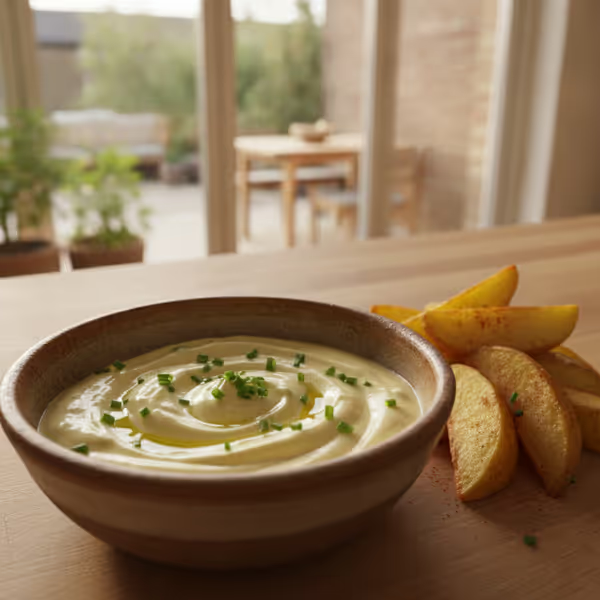
O aioli caseiro é um dos acompanhamentos mais versáteis que pode imaginar: cremoso, com sabor a alho e pronto em poucos minutos. Seja como molho para grelhados, barrado em pão fresco ou a acompanhar legumes, combina simplesmente com tudo. O segredo de um aioli bem-sucedido está na paciência ao incorporar o óleo e em garantir que todos os ingredientes estão à temperatura ambiente.
Ingredientes
- 250 ml óleo de colza, Se não encontrar, pode usar óleo de girassol ou um azeite suave.
- 1 ovo
- 1 c. de sopa vinagre
- 1 c. de chá açúcar
- 0,5 c. de chá sal
- 1 c. de chá mostarda
- 3 dentes alho
The ingredient amounts above scale with your choice. The value per serving stays the same, while the total in the pot grows with the number of servings.
All nutrition values side by side
| Nutrient | por porção (estimativa) | Total for 6 Porções |
|---|---|---|
| Calorias | 310 kcal | 1860 kcal |
| Hidratos de carbono | 1 g | 6 g |
| Proteína | 1 g | 6 g |
| Gordura | 34 g | 204 g |
| dos quais açúcares | 0,5 g | 3 g |
How this is calculated
Target amount = ingredient amount × target servings ÷ base servings. The result is then rounded for kitchen use: from 100 g or ml to the nearest 5, between 1 and 99 to the nearest 1, pieces and spoons to half units, amounts below one unit to quarters, thirds or halves. Teaspoons and tablespoons also go down to an eighth, kilograms and litres stay finer.
Total = value per serving × target servings. The value per serving is unchanged, because ingredient amount and serving count change by the same factor.
Sources
- Regulation (EU) No 1169/2011 (FIC), Art. 32 and 33: nutrition values per 100 g or 100 ml, additionally allowed per portion.
- European Commission, Guidance document for competent authorities for the control of compliance with EU food law, setting of tolerances for nutrient values declared on a label, December 2012.
Nutrition values are estimates from the recipe record, not laboratory results. Even for checked labels the EU sets tolerances: for fat, protein and carbohydrates 20 percent in the range of 10 to 40 g per 100 g, and 2 g per 100 g below that. Home cooking varies more, because variety, size and cooking loss of the ingredients differ. Kitchen rounding also shifts the total slightly against the plain rule of three. Anyone who has to keep amounts exact for medical reasons, for example during a nutrition therapy prescribed by a doctor, should discuss them with a doctor or a registered dietitian. Your serving count is calculated in your browser only, it is neither stored nor transmitted.
Modo de preparação
- Certifique-se de que todos os ingredientes estão à temperatura ambiente antes de começar. Este passo é essential para que o aioli ligue bem e não talhe.
- Coloque o ovo, o vinagre, o açúcar, o sal, a mostarda e o alho num recipiente alto e triture tudo com a varinha mágica até obter uma massa homogénea.
- Junte agora o óleo de colza lentamente, de preferência em fio fino, e continue a triturar sem parar até o aioli ganhar uma consistência firme e cremosa.
Já cozinhou? Conte como ficou.
Gostou? Avalie a receita
Valores nutricionais por porção (estimativa)
| Calorias | 310 kcal |
|---|---|
| Hidratos de carbono | 1 g |
| Proteína | 1 g |
| Gordura | 34 g |
| Fibra | 0 g |
| dos quais açúcares | 0.5 g |
Perguntas frequentes
Porque é que o meu aioli talhou?
Isso acontece normalmente quando os ingredientes têm temperaturas diferentes ou quando o óleo é adicionado demasiado depressa. Garanta que todos os ingredientes estão à temperatura ambiente e incorpore o óleo lentamente.
Quanto tempo dura o aioli caseiro?
No frigorífico, num recipiente bem fechado, o aioli conserva-se cerca de 3 a 4 dias. Como leva ovo cru, deve ser consumido rapidamente.
Posso usar outro óleo em vez de óleo de colza?
Sim, o óleo de girassol ou um azeite suave também funcionam bem. No entanto, os azeites mais intensos podem dar um sabor forte e ligeiramente amargo.
O aioli é adequado a uma alimentação baixa em hidratos de carbono?
Sim, este aioli praticamente não tem hidratos de carbono e encaixa bem numa alimentação reduzida em hidratos.